
Interpretation: Stopping by the Woods on a Snowy Evening

Share:


Robert Frost is an American poet renowned for his depictions of life, which are buried within his poems. Having lived over a century ago, his poems still remain relevant to the educational environment. What I will be writing about today is my interpretation of his work, Stopping by the Woods on a Snowy Evening.
The poem consists of four stanzas, within the scheme AABA. Each stanza represents a different perspective, or what could be different parts of the protagonist's life. The first part of said poem goes as follows:
“Whose woods these are I think I know
His house is in the village though;
He will not see me stopping here
To match his woods fill up with snow.”
I believe this stanza represents the past experiences of said protagonist. The woods he thinks he knows represents his past, and the man he thinks he knows is the old him. The old him has not settled; he has a lot of experiences left to handle, thus represented by the snow that slowly fills up. Conclusively, this represents the man stopping as if to watch his past self engulfed in the woods, free to roam with no fixed shelter yet, while the actions he does depict the snow that slowly falls and covers the forest.
“My little horse must think it queer
To stop without a farmhouse near
Between the woods and frozen lake
The darkest evening of the year
He gives his harness bells a shake
To ask if there is some mistake
The only sound’s the sweep
Of easy wind and downy flake”
According to my belief, the horse is a representation of an insignificant bystander, possibly even society. The horse is by his side, yet belittled. The same belittled horse searches for regularity, the horse searches for civilisation, the same rhythm he is used to; that being the farmhouse. The horse cannot understand the man’s experience, the horse will not understand the memories and admiration of the woods that are the man’s past, the horse can only search for what it knows, the horse is a representation of society; that only watches what it sees externally and tries to bring the man back to what it knows as normality, usualness.
“The woods are lovely, dark and deep,
But I have promises to keep,
And miles to go before I sleep,
And miles to go before I sleep.”
The man reflects from his past, the man wishes for a chance again, as we all do. Yet, he cannot go back; he can only go forth. The man’s responsibility is not to watch the snow covering the forest again and again; it is to continue through the woods, through his journey that is life, and to work on what he has started. The forest will eventually be covered in snow, similar to how the end of the journey is the inevitable end of one’s life, yet, the purpose of one being granted such an opportunity is not to walk forth till he is covered in snow; it is to walk through the hardships that are snow till he reaches spring. Till he reaches the results of what he has started; till he finds the fruit of merit. That is why we mustn’t spend all our time watching the trees and observing the snow fall, we mustn’t spend it all only marching through the woods either. We must learn that a journey is one where there is no end; there is no limit; limits are set by our own thoughts, thus we must learn to aim high. We must be ready to continue our journey at all times; and must simultaneously enjoy every part of it, reflecting on our experiences.
1 reads
Published on 6/3/2026
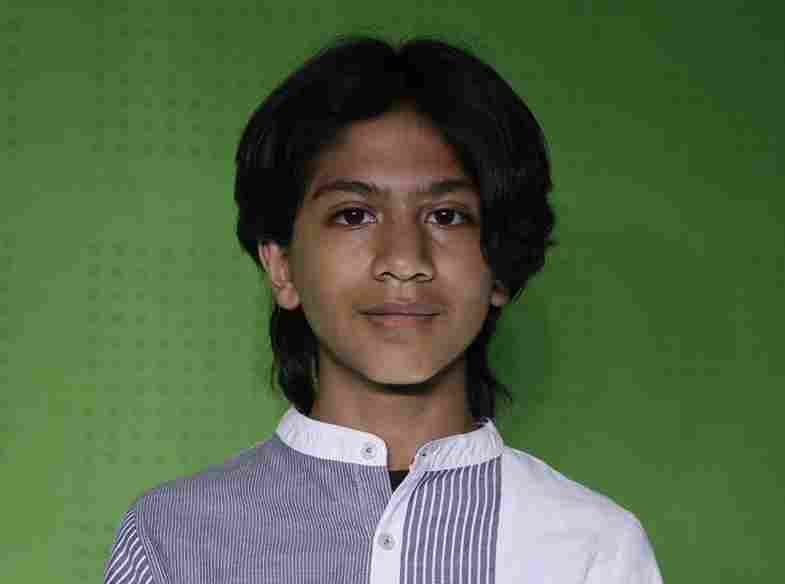
Bimarsh Raj Ghimire is a student at Deerwalk Sifal School who loves writing articles, exploring diverse topics, and engaging in creative discussions.
Bimarsh Raj Ghimire
Grade 9
Roll No: 30064
15
More Articles from
Student
Art
A Day at Kirtipur
Importance of Mental Health

My Trip to Pikey Peak
स्वास्थ्य

Trekking

Child Marriage in Nepal
मेरो जन्मस्थान - पहिले र अहिले

Adventurous Trek to Panchpokhari
जाडो मौसम
मनाेहरा पुल
Like The Flowing River
मेराे विचारमा: भग्न प्रेमशाला


