Interesting Facts About Animals

Share:


Interesting Facts About Animals
The kingdom Animalia is one of the five kingdoms into which biologists divide the living world. The other four kingdoms are:
Monera: Unicellular prokaryotes, which are simple organisms that lack a nucleus.
Protista: Large unicellular eukaryotes, such as paramecium and amoeba.
Fungi: Organisms like molds, mildews, and mushrooms.
Plantae: All plant life.
Animalia is the largest and most diverse kingdom. Animals are generally categorized into two groups: vertebrates (animals with a backbone) and invertebrates (animals without a backbone). Interestingly, invertebrates make up more than 95% of all animal species on Earth, while vertebrates make up 5% or less.
Animalia is also referred to as Metazoa, a term that indicates the multicellular nature of its members. Unlike plants, which are autotrophic (making their own food), animals are heterotrophic. This means they depend on other organisms for nutrition, such as carnivores that eat other animals and herbivores that eat plants.
Systematics and Taxonomy
Systematics is the branch of biology that deals with the classification of organisms. Through this system, animals are assigned a kingdom, phylum, class, order, family, genus, and species. A taxon is a group of one or more populations of organisms that form a unit. For example, a domestic cat is classified as follows:
Kingdom: Animalia
Phylum: Chordata
Class: Mammalia
Order: Carnivora
Family: Felidae
Genus: Felis
Species: catus
Carl Linnaeus is widely known as the "father of taxonomy" for creating this system.
Classification Groups
Vertebrates are further divided into five classes: Pisces (Fish), Amphibia, Reptilia, Aves (Birds), and Mammalia. Invertebrates are divided into several phyla, including Protozoa, Porifera, Coelenterata, Platyhelminthes, Nemathelminthes, Annelida, Mollusca, Arthropoda, and Echinodermata.
Amusing and Interesting Facts About Animals
Elephants are the only mammals that cannot jump.
Polar bears actually have black skin underneath their white fur.
Sloths can take up to a month to digest a single leaf.
Hummingbirds are the only birds that can fly backwards.
The narwhal’s "horn" is actually a tooth that can grow up to ten feet long.
Octopuses have three hearts.
Cockroaches can live without their heads for about a week (rather than months) because they breathe through tiny holes called spiracles.
Fleas can jump up to 200 times their own body length.
The immortal jellyfish can revert to its earliest life stage when threatened or aged, effectively living forever.
Alaskan wood frogs can freeze nearly solid in winter and then "thaw" back to life in the spring.
Sea otters hold hands while sleeping so they do not drift apart in the current.
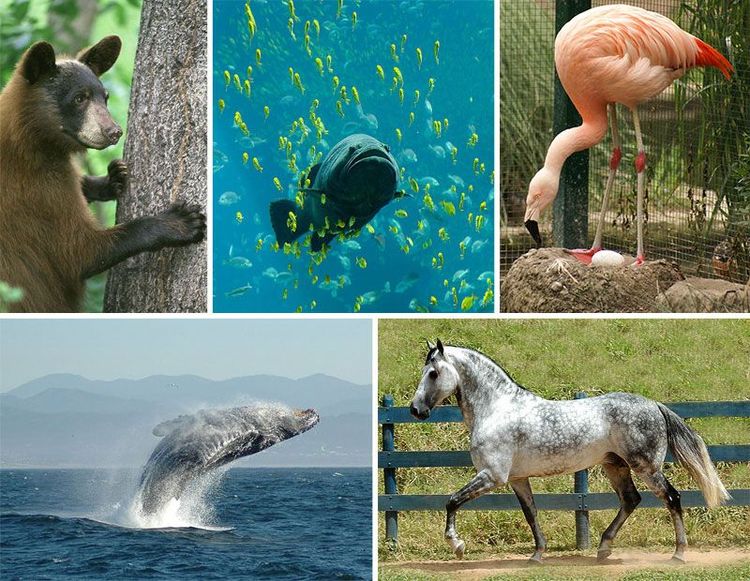
Flamingos are born gray; they turn pink due to the pigments in the shrimp and algae they eat.
An elephant flaps its ears to radiate heat and cool its body temperature.
0 reads
Published on 5/22/2026

Aayan Rai is a student at Deerwalk Sifal School who loves writing articles, exploring diverse topics, and engaging in creative discussions.
Aayaan Rai
Grade 8
Roll No: 31006
17
More Articles from
Student

My School

My Online Class

The Sun, The Moon, And The Earth

About Vehicles

About Elephant

My English Reading Class

घाम

I Miss Going To School

सहयोगी भावना
यसपालिको दसैँ

Bhupi Sherchan

The 7 Wonders of the Ancient World

किताब

Evolution Of Life On Earth
My Trip To Bhairahawa